





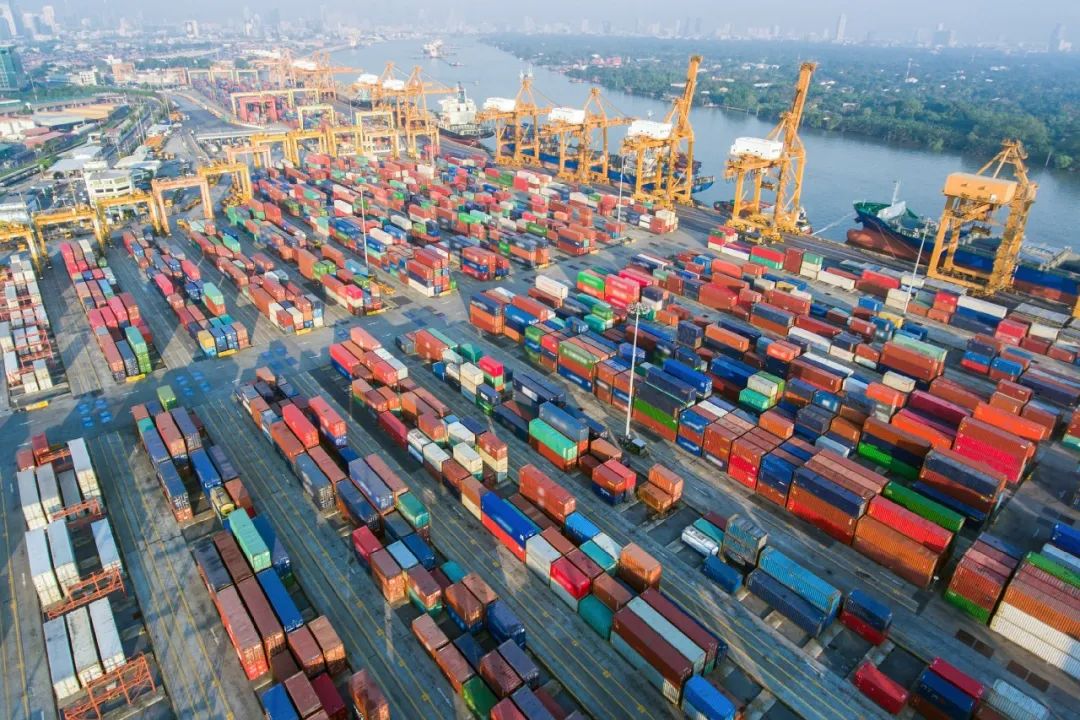
Ocean Freight Rates Decline, Blank Sailings Increase, and U.S. West Coast Port Risks Remain in Focus
As November 2026 approaches its final weeks, the global freight forwarding industry is experiencing several important changes.
On the one hand, ocean freight rates on certain major trade lanes from Asia to Europe and the United States are showing signs of decline. On the other hand, shipping lines are adjusting capacity through blank sailings in response to changing market demand.
Meanwhile, labor negotiations at the Ports of Los Angeles and Long Beach have reached an important stage, while the gradual return of vessels to the Red Sea and Suez Canal route continues to attract attention.
For Chinese exporters, the current market is not simply about lower freight rates. Shipping prices, vessel capacity, schedule reliability, and transportation risks are all changing simultaneously.
1. Global Ocean Freight Rates Continue to Decline
According to the latest container freight rate index published by Xeneta on November 19, 2026, the reference rate for 40-foot containers from the Far East to North Europe stood at USD 3,394, down 4.56% over the previous seven days and 9.06% over the previous 30 days.
Other major trade lanes also recorded varying degrees of price movement:
- Far East to North Europe: USD 3,394, down 9.06% over 30 days.
- Far East to the U.S. West Coast: USD 8,132, down 2.32% over 30 days.
- Far East to the East Coast of South America: USD 3,688, down 36.09% over 30 days.
These figures are reference index rates published by Xeneta. They should not be interpreted as guaranteed transaction prices available from every freight forwarder. Actual booking rates depend on the shipping line, origin and destination ports, cargo characteristics, and contractual terms.
The overall trend suggests that freight rates on some major routes are under downward pressure, potentially giving exporters more room to negotiate shipping costs.
However, lower market averages do not mean that every route is becoming cheaper, nor do they guarantee further price reductions in the coming weeks.
2. Shipping Lines Increase Blank Sailings to Manage Capacity
While freight rates are declining, shipping lines are adjusting vessel capacity through blank sailings.
According to Green Worldwide Shipping’s Week 47 market update, published on November 18, Drewry expected 52 blank sailings across major east-west trade lanes between Weeks 47 and 51, out of 716 scheduled sailings. This represents a cancellation rate of approximately 7%.
The distribution of these cancellations was as follows:
- Asia–North Europe and Mediterranean routes accounted for 50%.
- Transpacific eastbound routes accounted for 31%.
- Transatlantic routes accounted for 19%.
These figures indicate that shipping lines are adjusting capacity in response to market demand and seeking to prevent excess vessel space from entering the market.
For exporters, blank sailings can have two major consequences.
First, scheduled departures may change.
If a booked sailing is cancelled, cargo may need to be transferred to the next available vessel, potentially delaying delivery.
Second, available shipping capacity may fluctuate.
Although overall market rates are declining, certain ports, routes, and specific sailings may still experience limited space.
Therefore, exporters should not rely solely on average market freight rates when assessing booking availability.
3. Labor Negotiations at Los Angeles and Long Beach Ports Reach a Critical Stage
The Ports of Los Angeles and Long Beach are major gateways for Chinese exports entering the U.S. market.
According to Flexport’s logistics market update published on November 19, the labor contract extension covering approximately 250 port workers at the two ports was due to expire on November 20. Negotiations were ongoing, and no agreement had been announced at the time of the report.
It is important to clarify that no strike had been announced at the time of publication, and terminal operations were continuing normally. The expiration of a labor agreement does not automatically mean that a strike will take place.
Meanwhile, the Port of Los Angeles handled 1,026,872 TEUs in October 2026, marking its second consecutive month above the one-million-TEU threshold.
High cargo volumes are also putting pressure on inland transportation. According to the report, average rail dwell time at Los Angeles and Long Beach increased from 7.19 days in September to 8.16 days in October. Truck dwell times also increased.
This means that even when cargo arrives at a U.S. port on schedule, delays may still occur during rail transportation, container pickup, and inland delivery.
Exporters shipping to the U.S. West Coast should closely monitor developments in labor negotiations and arrange destination-side container pickup and inland transportation in advance.
4. Red Sea Shipping Routes Continue to Recover, but Risks Remain
The Red Sea and Suez Canal remain important areas of focus for the global shipping industry.
According to Drewry data cited by Green Worldwide Shipping, 57 container ships transited the Suez Canal during the week ending November 15, representing a 73% year-on-year increase.
Approximately 60% of container shipping capacity between Asia and Europe was reportedly operating through the Suez Canal route.
In addition, the Gemini Cooperation between Maersk and Hapag-Lloyd announced on November 16 that three additional Asia–Europe services would gradually return to the Suez Canal route. The first relevant sailings were scheduled for December 4, December 20, and January 14, 2027.
The gradual restoration of these routes could shorten transit times on certain Asia–Europe services and improve vessel utilization.
However, security conditions in and around the Red Sea remain uncertain. Shipping lines will continue to assess the situation before deciding whether to maintain Suez Canal operations.
Exporters should therefore confirm the actual vessel, voyage number, and routing with their freight forwarders instead of assuming that all shipments will automatically use the Suez Canal following a general route-restoration announcement.
5. What Should Chinese Exporters Consider When Booking Shipments?
Given declining freight rates, increasing blank sailings, and potential port-related risks, exporters should take several practical steps.
1. Do Not Compare Freight Rates Alone
When requesting quotations, exporters should also confirm vessel schedules, estimated transit times, transshipment arrangements, destination charges, and quotation validity.
A low freight quotation without clear schedule information or a complete breakdown of charges does not necessarily represent the lowest overall logistics cost.
2. Confirm Vessel Schedules in Advance for Time-Sensitive Orders
For shipments with strict delivery deadlines, exporters should confirm whether the shipping line has planned any blank sailings and allow sufficient time for possible rebooking.
For cargo destined for the U.S. West Coast, both port pickup and inland transportation should be included in the delivery schedule.
3. Confirm Destination Customs Clearance and Delivery Arrangements
Ocean transportation is only one part of the logistics process.
After arrival, cargo may still require import customs clearance, terminal pickup, warehousing, and final delivery.
If destination-side arrangements are not prepared in advance, cargo may arrive at the port but remain there longer than expected.
4. Pay Attention to Surcharges and Additional Costs
Exporters should pay particular attention to:
- Peak Season Surcharges (PSS)
- Bunker and fuel surcharges
- Port congestion-related charges
- Demurrage and detention charges
- Destination customs clearance and delivery fees
Flexport’s November 19 market update also mentioned a planned Peak Season Surcharge implementation on certain Asia–Europe services from December 1. Exporters should verify the applicable routes, amounts, and effective conditions with their carriers before booking to avoid unexpected charges.
5. Develop Alternative Transportation Options
Exporters with regular shipments should avoid relying too heavily on a single shipping line or transportation route.
Depending on cargo delivery deadlines, freight costs, and destination requirements, businesses can prepare alternative carriers and transshipment routes in advance. For urgent shipments, a combination of sea and air freight may also be worth considering.
6. Cross-Border Supply Chain Management Goes Beyond Booking Cargo Space
Recent developments in the international freight market demonstrate that logistics risks do not occur only during ocean transportation.
From export arrangements and customs documentation to international shipping, destination customs clearance, warehousing, and overseas delivery, every stage can affect the successful fulfillment of an order.
For businesses involved in import and export operations between Mainland China and Hong Kong, it is particularly important to coordinate trading entities, customs arrangements, shipping documents, and related charges in advance to ensure consistency between the actual transaction and logistics operations.
For foreign trade companies and cross-border e-commerce businesses, effective supply chain management is not simply about finding the cheapest freight forwarder. It is about combining suitable transportation, customs clearance, and overseas warehousing and distribution resources based on actual cargo requirements, delivery schedules, and trade arrangements.
By integrating import and export agency services, purchasing agency services, international freight forwarding, and overseas warehousing and distribution, businesses can gain better visibility into logistics milestones, cost structures, and potential risks while reducing communication costs and operational uncertainties in cross-border trade.
Conclusion: Lower Freight Rates Do Not Necessarily Mean Lower Logistics Risks
In the second half of November 2026, the global ocean freight market is experiencing a period of adjustment, with declining rates and changing shipping routes occurring simultaneously.
Freight rates on certain Asia–Europe routes are falling, shipping lines are increasing blank sailings, labor negotiations at U.S. West Coast ports have reached an important stage, and Red Sea shipping routes are gradually recovering amid ongoing security uncertainties.
For exporters, this is an important time to review shipping contracts, annual logistics budgets, and supply chain arrangements.
When choosing a freight forwarder, businesses should look beyond how much they can save on a single shipment. They should also consider whether the transportation process is transparent, whether unexpected disruptions can be handled efficiently, and whether the entire cross-border transaction can be completed smoothly.
In an increasingly complex international logistics environment, early planning and the effective allocation of transportation resources can help businesses navigate the year-end shipping peak and prepare for changes in the global freight market in 2027.